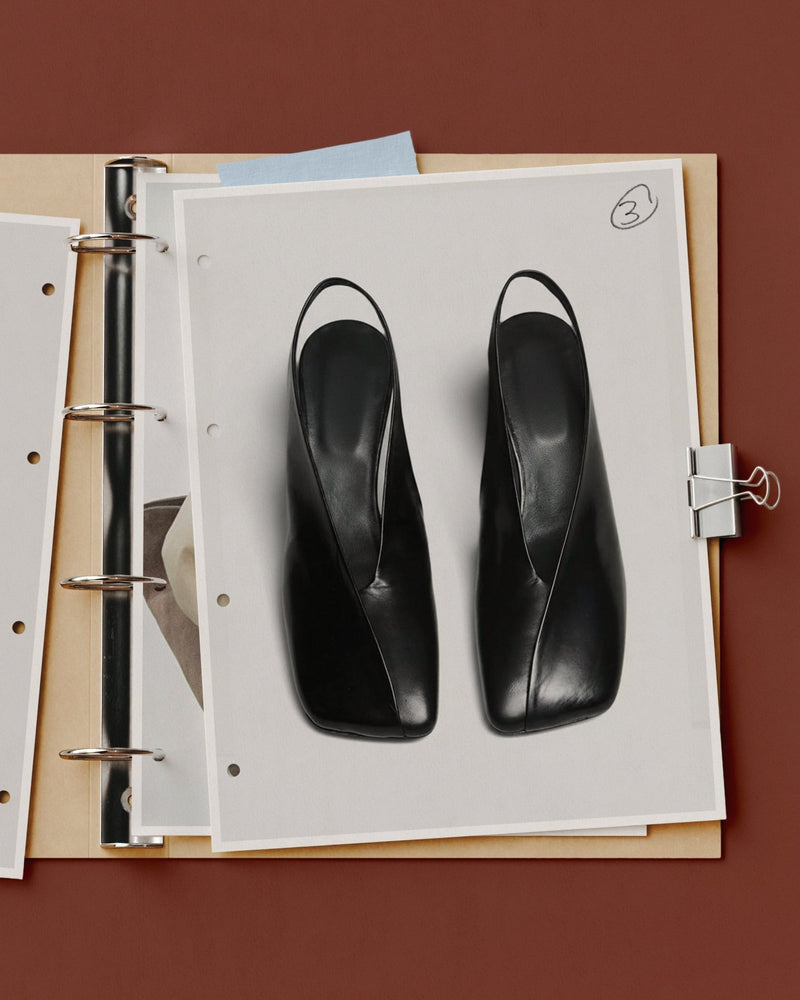
October November is an independent design studio known for its beautifully crafted, photorealistic mockups that serve designers and creatives worldwide. Their work combines distinct, atmospheric visuals with thoughtful and highly customizable infrastructure—every product invites craft, control, and creative expression in equal measure. At the heart of October November's offering is a diverse and ever-expanding library of premium mockup kits. From stationery and packaging to devices and artwork frames, each kit is meticulously built with flexibility in mind. The studio makes simplicity feel intentional. The mockups, though visually complex, are easily editable via smart object layers, extensive documentation, and easy swapping of elements—allowing designers to focus on their craft without friction.
SS: October November's mockups have such a distinct visual language. How do you approach developing a new collection from idea to final product?
ON: An idea for a new mockup collection always starts with a spark resulting from a visual that I've been drawn to – the way light interacts with a certain material, the design of a specific type of packaging, or the way a photograph has been lit or prop-styled. This leads to experimentation and play – whether it be picking up my camera, opening Blender and recreating an object in 3D, scanning materials on a flatbed scanner, or observing the way light reflects off of a surface and reproducing it within Photoshop. Once I'm excited about the results of a particular experiment, I'll then explore how it can be built out into something useful for others – a collection of tools to assist in their own creative process. From there, it becomes a process of refinement with the end user in mind. Cleaning up and paring down, organizing layers and groups within Photoshop – making the tool as adaptable, flexible, and intuitive to use as possible.
SS: Your products are both functional and atmospheric. How do you strike that balance between technical usability and strong visual mood?
ON: I find that it's exciting working backwards – creating the type of visuals that I enjoy and want to see, and then reverse-engineering the visuals into mockups with a focus on functionality. I find the parameters that come with mockups motivating and inspiring, and enjoy pushing the limits of how photorealistic and intricate an image can be while keeping it as flexible as possible for various scenarios. This process varies for each mockup, and involves a lot of testing with various placeholder imagery. What's the simplest way to make this smart object layer look as photorealistic as possible, while accounting for all of the various styles of design and imagery that could be inserted into it? It's an exciting challenge that involves a lot of refinement and tweaking.
SS: Many of your kits feel rooted in subtle storytelling through light, texture, and composition. Where do you tend to draw inspiration for those details?
ON: I've been interested in making images my entire life. Growing up, I loved crafting, drawing, scrapbooking, collaging, photographing – along with teaching myself how to create digitally in Microsoft Paint, Photoshop, and 3D modeling software. My interests eventually led me to art school where I studied photography and art history, which broadened my perspective of image making and provided me with the space to explore my creative interests while I began freelancing. Over time, these experiences and the mix of physical and digital craft have informed my taste and culminated in an eye that I feel I can trust intuitively when creating. Inspiration comes from many places and tangential interests: film, music, photography, food, design. I enjoy collecting paper ephemera, materials, and art and design objects that inspire me. I'm fascinated by the intrinsic illusory quality of photographs and images – their ability to trick the eye and their mutability in digital spaces. I'm always observing patterns and trends in design, art direction, and photography and filing inspiration into boards on Are.na and Pinterest.
SS: You've built tools that other designers can adapt to their own style. How do you think about designing for flexibility without losing your own voice?
ON: I see myself as my own demographic in a sense. I began October November after searching for mockups while in school and working with agencies, and being dissatisfied with what was available at the time. I wanted mockups that felt less sterile, that evoked emotion and a sense of time and place, and that aligned with the type of visuals I was interested in. October November functions as an outlet to experiment and create imagery that shares a similar visual lexicon as the various niches of design, art direction, and photography that I'm drawn to – and the mockups often appeal to those with similar sensibilities. My own voice is inherently present and embedded throughout the creative process, with the mockup's final form being shaped by my particular point of view, skills and limitations, and techniques. I tend to feel quite precious about what I'm creating when the mockups are in progress, but once they're out of my hands and in the world, they transform entirely and are endlessly iterating and adapting into new creations each time someone uses them. Seeing what others create with them is always the most exciting and humbling part.
SS: How do you keep your workflow efficient while working at such a high level of detail?
ON: It's an ongoing process that I'm often making adjustments to. Establishing parameters for myself and ways of templating and automating certain aspects of my workflow has been key. Photoshop scripting and keyboard shortcuts are huge time savers, and creating an organized archive of re-usable assets, textures, and visual components to quickly pull from frees up time for experimentation.
SS: Without giving too much away, what's next for October November? Are there particular types of mockups or visual formats you're excited to explore in the future?
ON: Many of the latest releases have been quite elaborate drag-and-drop mockup kits, that allow you to arrange each element to design your own mockups. I love creating these, and it's always a thrilling challenge to design these as photo-realistically as possible within the constraints inherent to these types of mockups. For a few upcoming releases, I'm excited to step outside of this for a bit and focus on some more styled, still life-type mockups, exploring new ways of pushing the limits of photorealism within Photoshop – as well as incorporating more video.